The Initiation Well (Or: How to Reprogram a Gear)
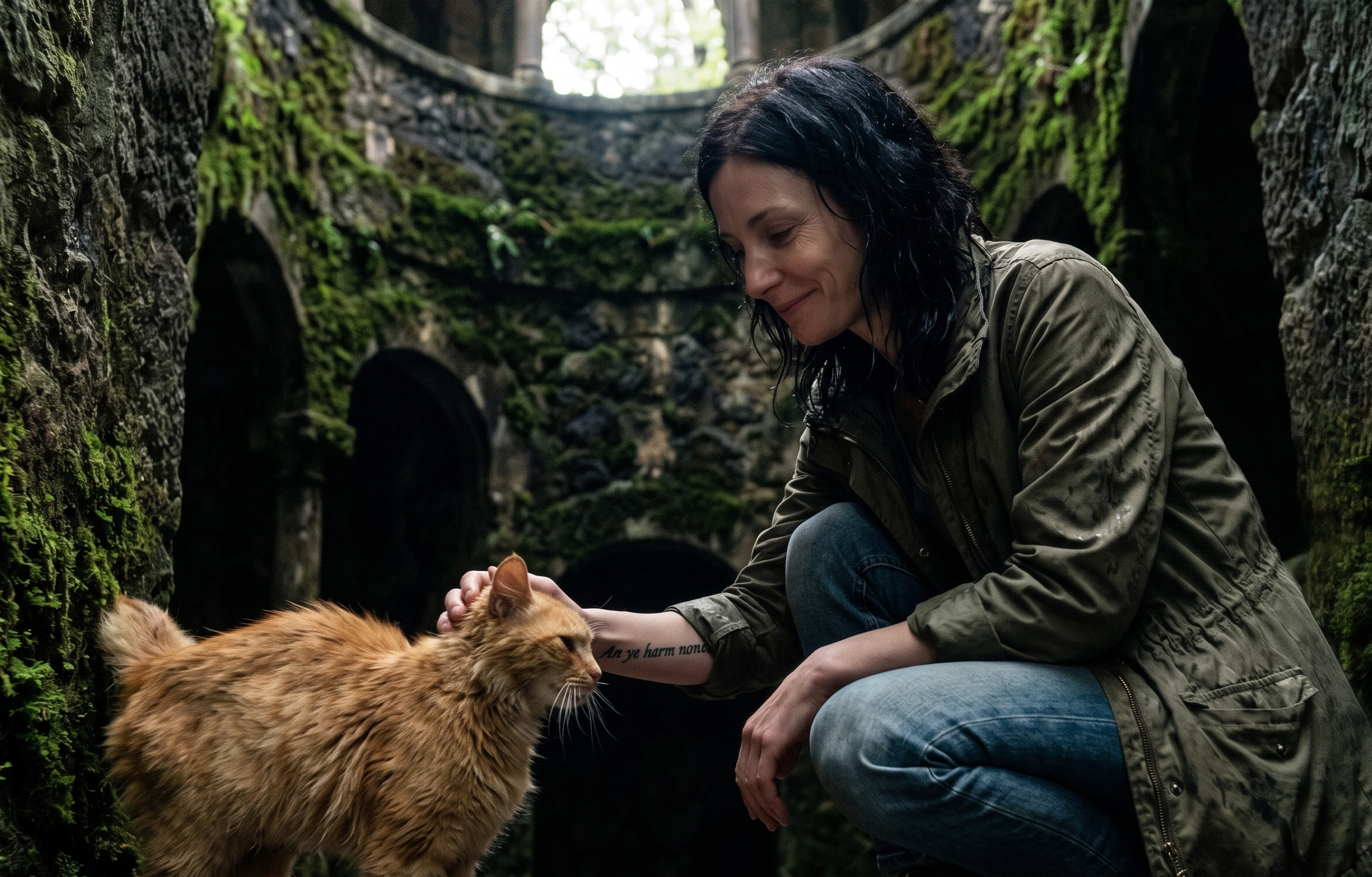
Aunt Lenore finally got her occult architecture.
About an hour outside the oat-milk panic of Lisbon is Sintra. It’s a town nestled in the mountains, famous for palaces, fog, and nineteenth-century millionaires with too much money and a deep interest in the esoteric. Lenore specifically directed me to the Quinta da Regaleira estate to walk down the "Initiation Well."
It’s not a well for water. It’s an inverted stone tower that spirals almost a hundred feet straight down into the earth, built specifically for Masonic and Rosicrucian initiation rites.
Walking down the moss-covered spiral staircase is a massive sensory shift. The air drops ten degrees. The noise of the tourists up top gets swallowed by the stone, replaced by the sound of dripping water. It smells intensely of damp earth, ferns, and old secrets.
When I reached the bottom—a stone floor laid out in a compass rose—I found someone who clearly knew exactly how to navigate the dark.
Her name was Inês. She was in her late sixties, wearing a spectacularly bright yellow silk scarf, and she was crouched over a small tin of tuna, feeding a scruffy orange feral cat. She wasn't a groundskeeper; she was just a local who knew the estate’s stray population.
We struck up a conversation while the cat ate. Inês’s English was perfect. She told me that for thirty years, she worked as a logistics director for a major shipping firm in Lisbon.
"I was very important," she said, waving a hand dismissively. "My phones rang all day. I was angry all the time. Then, my heart stopped for thirty seconds during a board meeting."
She told me she woke up in the hospital and realized she was just a gear in a very angry, very boring clock. So, she quit. She sold her apartment, moved to the damp hills of Sintra, and now she paints watercolors of mushrooms and feeds the strays. She looked incredibly, radiantly healthy. She was thriving.
I thought about the sweating tech bro I watched last week, trapped in his miserable algorithmic loop of hustle and panic.
Inês didn't magically discover "free will." She didn't break the laws of physics. She just recognized the algorithm of her own life. She saw that her high-stress environment (the input) was inevitably producing misery and heart failure (the output). So, she didn't try to change herself; she changed the environment. She swapped her dataset.
Maybe free will is a complete illusion. Maybe we are all just the inevitable result of our neurobiology colliding with our circumstances. But listening to Inês laugh while an orange cat rubbed against her boots, I realized that even if it's an illusion, life works a hell of a lot better if you pretend you have a choice. You can't stop being a machine, but you can absolutely choose which clock you want to turn in.
I slid my hand into my jacket pocket and gripped my plastic French manager. I asked the 8-Ball if I should risk petting the feral cat.
"Sans aucun doute," the little triangle read. Without a doubt.